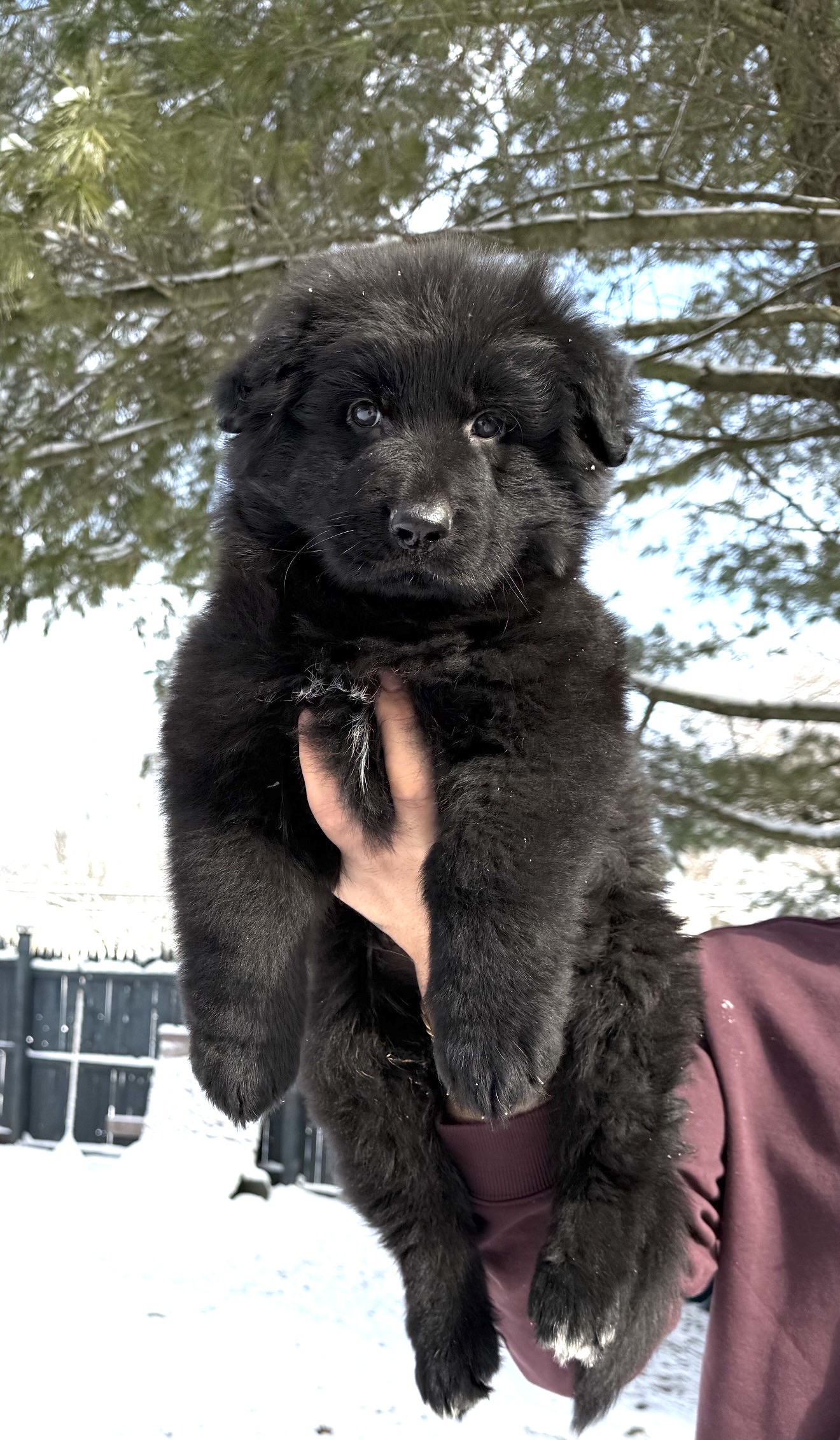
When choosing German Shepherd puppies, it is easy to focus on the puppy’s appearance. Coat color, coat length and overall structure can all influence which puppy catches your attention.
However, there is much more to consider.
The parents behind a litter provide important information about the puppy’s ancestry, health background, bloodline and potential characteristics. Genetics can influence many traits, while early socialization, training and the puppy’s environment also play an important role in development.
If you are considering German Shepherd puppies, learning about their parents is an important part of making an informed decision.
Why Do German Shepherd Parents Matter?
The sire and dam are the foundation of every litter.
Learning about the parents can give prospective owners useful information about:
- Pedigree and ancestry
- Bloodlines
- Health testing
- Physical structure
- Coat characteristics
- Temperament
- Working or show background
- Other relevant breeding information
This does not mean that every puppy will develop exactly like its parents. Puppies inherit traits from both sides of their family, and their development is also influenced by their experiences, socialization, training and environment.
For this reason, a good breeding program considers the qualities of both parents when planning a litter.
Understanding German Shepherd Bloodlines
German Shepherd bloodlines can have different historical breeding purposes and characteristics.
Puppies Kingdom Team’s breeding program includes European German Shepherd bloodlines, including West-German show, West-German working and Czech working lines.
West-German Show Lines
Show-line German Shepherds are generally associated with breeding programs that place significant emphasis on conformation, structure, movement and breed characteristics.
However, pedigree alone does not determine whether an individual dog will be a good companion. Health, temperament and the individual characteristics of the dog also matter.
West-German Working Lines
Working-line German Shepherds have historically been developed with greater emphasis on working ability and performance.
Families considering a puppy from a working-line background should understand that individual energy levels and temperament can vary and that German Shepherds generally benefit from appropriate exercise, training and mental stimulation.
Czech Working Lines
Czech working lines have their own history and breeding background within the German Shepherd breed.
As with any bloodline, the individual dogs behind a litter matter more than simply applying a label. Prospective owners should ask about the specific sire, dam, pedigree and characteristics of the litter they are considering.
Can German Shepherd Parents Influence Coat Type?
Yes. Coat characteristics are influenced by genetics inherited from the parents.
German Shepherds can have different coat lengths and textures. Standard-coated German Shepherds have the coat type most commonly associated with the breed, while long-haired German Shepherds have a noticeably longer and fuller coat.
If coat length is important to you, ask the breeder about the parents and the coat characteristics expected within a specific litter.
It is better to discuss the individual litter than to assume that every puppy from a particular bloodline will have the same coat.
What to Know About Long-Haired GSD Puppies
Long-haired GSD puppies have a distinctive appearance because of their longer, fuller coat.
Many families are attracted to this coat type because of its soft, substantial appearance. However, the additional coat also means owners should be prepared for regular grooming and brushing.
Before choosing a long-haired German Shepherd puppy, consider:
- Regular brushing
- Shedding
- Coat maintenance
- Keeping the coat clean
- Appropriate grooming tools
- Time required for routine care
Long-haired German Shepherds are still German Shepherds and require the same commitment to training, exercise, socialization and veterinary care as other dogs of the breed.
If you specifically want a long-haired GSD puppy, ask about current and upcoming litters and the coat characteristics of the parents.
German Shepherd Puppies Are More Than Their Appearance
A puppy’s appearance is only one part of the decision.
When choosing German Shepherd puppies, families should also consider:
Health
Ask about the health screening of the breeding dogs and veterinary care provided to the puppies.
Temperament
Every puppy develops its own personality. Ask what the breeder can tell you about the puppy’s developing temperament and the characteristics of the parents.
Energy Level
German Shepherds are intelligent and active dogs. Consider whether your family can provide adequate exercise, training and mental stimulation.
Socialization
Early experiences can help puppies become comfortable around people and their surroundings. Ask how the litter is handled and socialized before going home.
Bloodline
Pedigree and bloodline information can help you understand a puppy’s ancestry and breeding background.
Considering all of these factors gives you a better foundation for choosing a puppy than appearance alone.
How Early Socialization Works With Genetics
Genetics can influence characteristics, but a puppy’s experiences also matter.
Puppies raised with regular human interaction and positive experiences can begin developing confidence and familiarity with everyday situations.
Puppies Kingdom Team raises puppies with hands-on care, family interaction and early socialization.
After a puppy goes home, the new family becomes responsible for continuing that foundation through appropriate socialization, training, exercise and positive experiences.
What Health Information Should You Ask About the Parents?
When considering a German Shepherd litter, ask the breeder what health information is available for the sire and dam.
Depending on the individual breeding dog, information may include screening related to:
- Hips
- Elbows
- Genetic conditions
- Veterinary evaluations
- Other relevant health information
Puppies Kingdom Team incorporates health screening into its breeding program and provides available health information for its breeding dogs.
Families should always ask about the specific parents of the litter they are considering because health information can differ between individual dogs.
Meet the German Shepherd Dogs Behind Our Puppies
Learning about the parents is one of the best ways to understand the background of a German Shepherd litter.
Puppies Kingdom Team provides information about its breeding dogs, including their pedigrees, bloodlines and available health information.
The breeding dogs include German Shepherds from European bloodlines, with individual dogs having their own characteristics and backgrounds.
Reviewing the parent dogs can help you ask more informed questions before choosing a puppy.
How Do German Shepherd Puppies Develop After Birth?
A puppy’s development does not stop at birth.
During the early weeks, puppies begin experiencing people, sounds, movement and their surroundings. Their interactions during this period can contribute to their development.
As they grow, continued socialization and training become increasingly important.
Once a puppy joins a new family, owners should provide:
- Consistent training
- Appropriate exercise
- Positive social experiences
- Mental stimulation
- Veterinary care
- A safe and structured home environment
These factors work alongside genetics to shape the adult dog.
Choosing a German Shepherd Puppy Based on Your Lifestyle
The right puppy is not necessarily the one with the most impressive appearance.
Think about how a German Shepherd will fit into your daily life.
If you have an active household, you may be able to provide more opportunities for exercise and training. If you are primarily looking for a family companion, discuss your expectations with the breeder and ask about the individual puppy’s developing characteristics.
If you are interested in a long-haired GSD puppy, also consider whether you are prepared for the additional coat care that comes with a longer coat.
The best decision is one that considers both what you want in a dog and what the dog will need from you.
Frequently Asked Questions
1. What should I know about the parents of German Shepherd puppies?
Ask about the sire and dam’s health information, pedigree, bloodlines, temperament, structure and other relevant characteristics. The parents provide important background about the litter.
2. Can German Shepherd parents influence a puppy’s coat?
Yes. Coat characteristics are influenced by genetics inherited from the parents. However, individual puppies can vary, so the specific litter and parent dogs should be discussed with the breeder.
3. What are long-haired GSD puppies?
Long-haired GSD puppies are German Shepherd puppies with a genetically influenced longer and fuller coat. They have the same breed characteristics as other German Shepherds but require appropriate coat care and grooming.
4. Do you have long-haired GSD puppies?
Long-haired puppies may be available depending on current and upcoming litters. Contact Puppies Kingdom Team to ask about specific litters and the coat characteristics of their parents.
5. Do long-haired German Shepherds require more grooming?
Yes. A longer coat generally requires regular brushing and additional coat maintenance compared with a shorter or standard coat.
6. What German Shepherd bloodlines are represented in your breeding program?
Puppies Kingdom Team’s breeding program includes European bloodlines, including West-German show, West-German working and Czech working lines. Specific lineage depends on the individual breeding dogs.
7. Are German Shepherd puppies from working lines different from show lines?
Working and show lines have historically been developed with different breeding priorities. Individual dogs can vary considerably, so families should learn about the specific parents and puppy rather than relying solely on the line designation.
8. Does a puppy’s bloodline determine its temperament?
No. Genetics can influence temperament, but development is also affected by early experiences, socialization, training and environment. Individual puppies should be evaluated on their own characteristics.
9. What health information should I ask about a German Shepherd puppy?
Ask about the health screening of the parents, veterinary care provided to the puppy, vaccinations, deworming, microchipping and any applicable health documentation or guarantee.
10. How are German Shepherd puppies socialized?
Puppies Kingdom Team raises puppies with regular human interaction, hands-on care and early socialization. New owners should continue socialization and training after bringing their puppy home.
11. How can I learn about the parents of a specific puppy?
Review the available information for the puppy or litter and visit the Our Dogs page. You can also contact Puppies Kingdom Team with questions about the sire, dam, pedigree and health information.
Learn More About the Dogs Behind Our Puppies
Choosing German Shepherd puppies is about more than finding a puppy with the right appearance. Learning about the parents, bloodlines, health information, coat characteristics and early upbringing can help you make a more informed decision.
If you are interested in learning more about the dogs behind Puppies Kingdom Team’s breeding program, visit the Our Dogs page.
If you are ready to see current puppies, you can also view the available puppies and learn more about individual litters.